The challenge
In the ongoing operation of rail vehicles and infrastructure facilities for public transport, breakdowns due to spare parts no longer being available pose a high risk. Many manufacturers discontinue the production of components after a few years—especially in the case of older traction vehicles or control systems.
In the public transport association in North Rhine-Westphalia under consideration, several safety-related and mechanical assemblies faced this problem: parts had been officially discontinued, suppliers were no longer available, or minimum order quantities were economically unviable. The goal was to create a sustainable and cost-efficient solution to maintain operational readiness—without interfering with the approval of the vehicles.
Our services
Zilken took on obsolescence management as a strategic and operational partner to the technical procurement department:
- Identification of critical components in existing plants and vehicles (fault and life cycle analysis).
- Qualitative Manufacturer and supplier search through the existing international Zilken network—with a focus on functionally compatible replacement and successor parts.
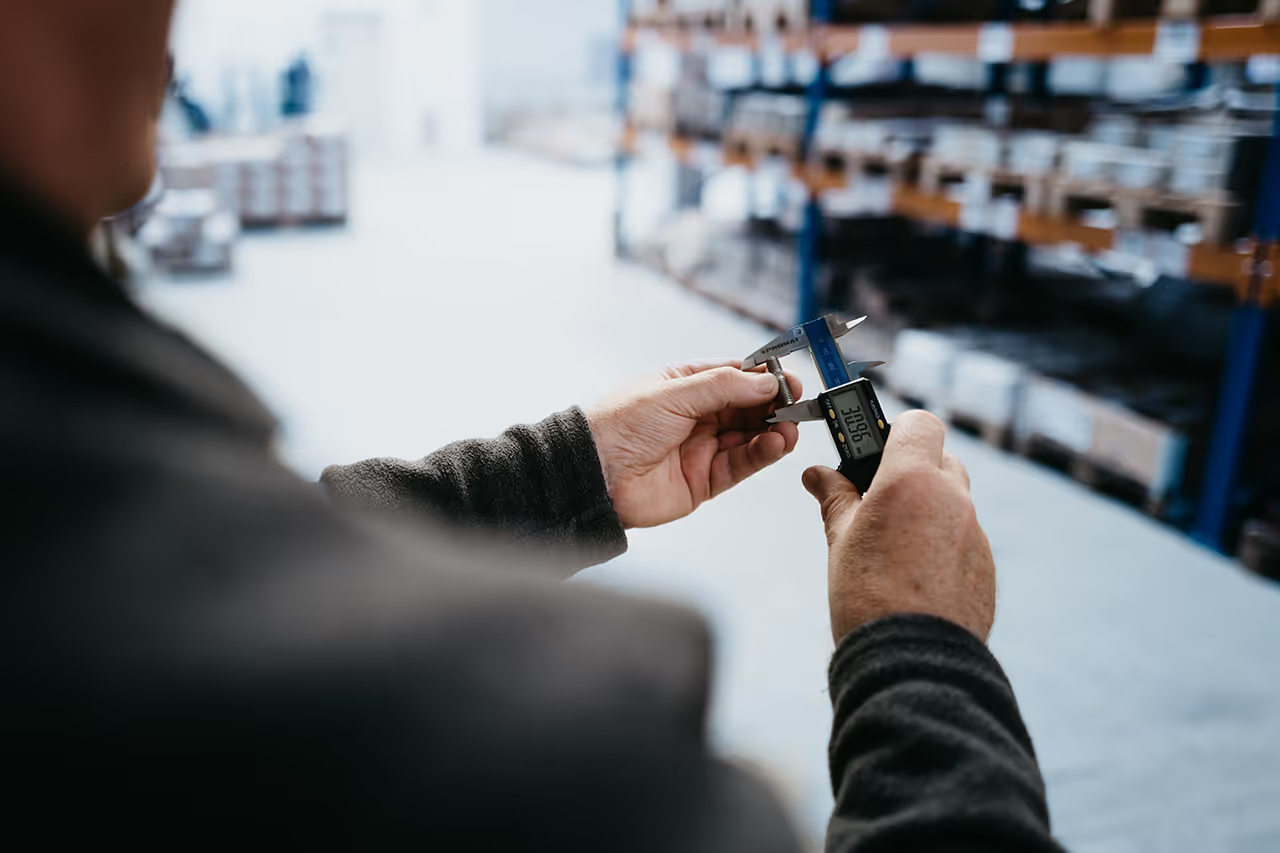
- Technical verification and sample approval in collaboration with the customer's specialist departments (workshops, maintenance, quality assurance).
- Auditing and qualification of new suppliers, including documentation and transfer to the material master data.
- Long-Term Supply and Price Security durch Rahmenverträge, alternative Hersteller und Bevorratungskonzepte.
The solution
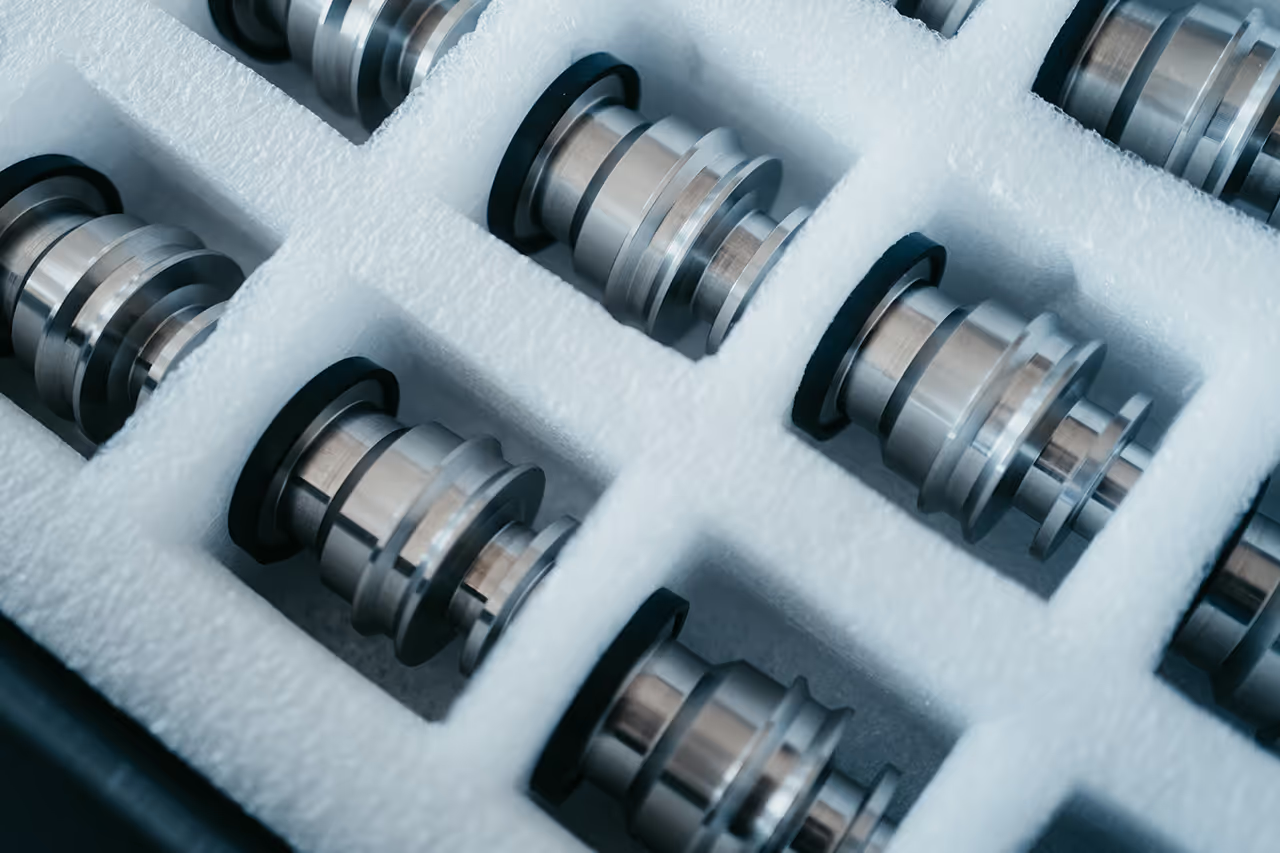
Through the structured comparison of technical specifications, material numbers, and manufacturer archives, several discontinued components could be replaced with identical or functionally compatible spare parts. Zilken coordinated supplier qualification and took over strategic purchasing from the new sources of supply.
This resulted in a stable MRO process: critical parts were replaced, inventories were built up in a predictable manner, risks were documented, and costs were stabilized in the long term. Operations could continue without expensive reengineering measures or custom-made parts—with consistent proof of technical suitability.
Figures (benefits/KPIs)
Figures (benefits/KPIs)
- Number of affected assemblies: over 40.
- Successful substitution: > 90% of the components originally discontinued.
- Lieferantenbasis: Reduzierung von > 60 auf < 10 strategische Hersteller und Distributoren.
- Cost stability: Savings of 15–25% compared to special procurement or new development.
- System availability: nearly 100%, no operational downtime due to parts shortages.
Note: The quantitative data is based on project data and conservative empirical values from several similar public transport projects.
Best practice – why this approach works
- Technical expertise meets market access: Zilken combines engineering know-how with a broad, vetted network of suppliers—enabling fast and reliable substitutions.
- Proactive obsolescence management: Critical components are identified early on and alternative sources of supply are secured—before a failure occurs.
- Sustainability through standardization: Substitutions are documented and incorporated into the material master data—to facilitate future procurement and ensure audit compliance.
- Cost efficiency instead of re-engineering: By using replacement and interchangeable parts, high one-time costs associated with new developments are avoided.
- Operational reliability: Maintenance operations remain effective, spare parts are available, and traffic safety is ensured.